Home · Walks & essays · England-wide
Essay
Walking on country lanes after dark: what the Highway Code asks of walkers
In November the light goes early, and the last mile back to the village is often a narrow lane with no pavement. The Highway Code has clear guidance for walkers, and it is worth knowing before the torch goes on.
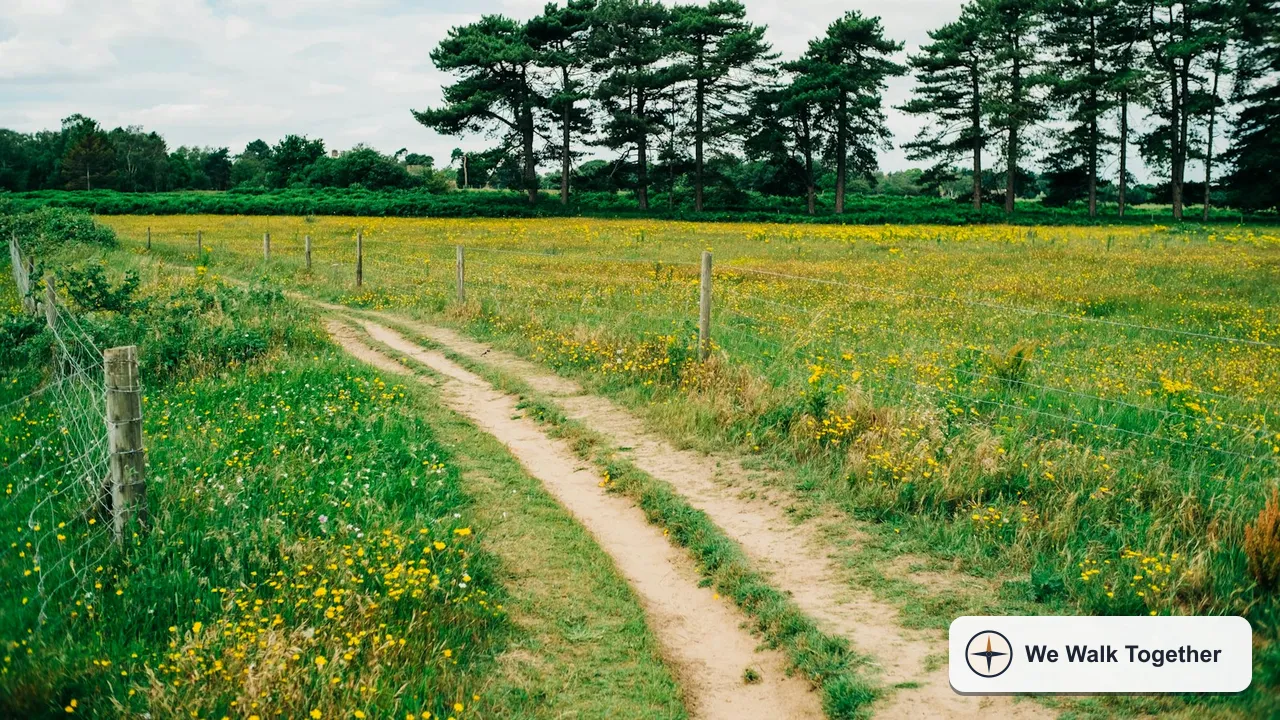
The quick version: if there is no pavement, walk on the right-hand side of the road so you face oncoming traffic, wear something light or bright in poor daylight, and use reflective material once it is dark. Those three points come straight from the Highway Code's rules for pedestrians, and on a winter lane they matter more than any piece of kit.
Late autumn is when this stops being theory. In London the sun set at about 4:12pm on 14 November 2026, according to timeanddate's sunrise and sunset tables, and by 21 December it sets at about 3:53pm. Further north it is earlier again. A walk that sets off after a late lunch will almost certainly finish in the dark.
What the rules actually say
The Highway Code rules for pedestrians start with the obvious: use pavements and footways where they exist, including paths running alongside a road, and avoid walking right next to the kerb with your back to the traffic.
Rule 2 covers the lanes most country walks finish on. If there is no pavement, keep to the right-hand side of the road so you can see oncoming traffic. The Code goes on to advise extra care on sharp right-hand bends, where it can be safer to cross so oncoming drivers can see you sooner, and to walk in single file where the road is narrow or the light is poor.
Rule 3 is about being seen. It asks walkers to wear or carry something light-coloured, bright or fluorescent in poor daylight, and to use reflective materials such as armbands, sashes, waistcoats, jackets or footwear when it is dark. Fluorescent colours work in daylight and dusk; reflective strips only work when a headlight hits them. You want both.
Rule 5 is the one walking groups forget. Organised walks of large groups on a road should use a pavement if there is one, and if not, they should keep to the left. A big group strung out on the right is hard for drivers to pass, so the Code treats it differently from one or two walkers. Groups are also advised to put look-outs at the front and back wearing fluorescent clothing in daylight and reflective clothing in the dark.
The right-hand bend problem
Walking on the right puts you face to face with traffic, which is the point. But on a tight right-hand bend you are on the inside of the curve, often tucked against a hedge, and a driver coming the other way sees you very late. On a left-hand bend you are on the outside and visible from further off.
So the practical routine on a winding lane is: stay right on the straights and on left-hand bends, and before a blind right-hand bend, cross to the left where you can see well in both directions, then cross back once the road straightens. It feels fussy the first time. After a few evenings it becomes automatic.
A cheap kit list for the last mile
A head torch with fresh batteries, a slim reflective band for an ankle (moving feet catch headlights well), and a light-coloured outer layer or bright bag cover. None of it is expensive and all of it fits in a coat pocket.
Torches, dogs and children
A head torch frees your hands and points where you look, which is ideal on a stile or a muddy field edge. On the road, though, a beam aimed at oncoming drivers can dazzle them. Tilt it down towards the verge in front of you when a car approaches, or switch to a lower setting. Some walkers carry a small handheld torch as well, held on the traffic side, so it shows where you are without blinding anyone.
Dogs should be on a short lead on the side away from traffic. A clip-on light for the collar costs very little and makes a dark dog visible. Children are best walked on the inside of an adult, with something reflective of their own; they are lower than a driver expects to look.
Plan the walk around the light
The better answer to dark lanes is often not to be on one. A few habits help:
- Check sunset time before you set out and plan to be off the open fields at least half an hour before it. Field paths in the dark are slow, and stiles and kissing gates are harder to find.
- Choose routes that finish on a footpath or pavement rather than a road. A quick look at the Ordnance Survey map shows where lanes have no verge. Our guide to reading an OS map explains the road colours.
- Reverse a circular walk if the road section falls at the end. Doing the lane in daylight and the field paths later, with the village lights ahead, is usually safer.
- Take a shortcut back to the car if the light is going faster than expected. Nobody is checking whether you finished the whole loop.
Sharing the lane well
Drivers on rural roads meet walkers, cyclists, horses and tractors, often without warning. A raised hand when a car slows for you goes a long way. If a lane is very narrow, step onto the verge or into a gateway to let traffic pass rather than pressing on. Assume the driver has not seen you until they visibly slow or move out.
The same common courtesy runs through the Countryside Code: park sensibly, leave gateways clear, and remember that a farm lane at dusk is somebody's route home from work. Being visible and predictable is the walker's half of that bargain.
When to skip the lane entirely
Some roads are simply not built for walking after dark. Fast B-roads with no verge, national speed limit lanes with high hedges, and anything with a blind summit are worth avoiding once the light goes, even with every reflective strip you own. If the only way back is one of those, a taxi number saved on your phone before you set off is a perfectly respectable piece of walking kit.