Home · Walks & essays · England-wide
Essay
The Countryside Code and the quiet art of not being in the way
The Countryside Code in plain English, what it means for the walker in practice, and the small habits that keep paths welcoming for everyone.
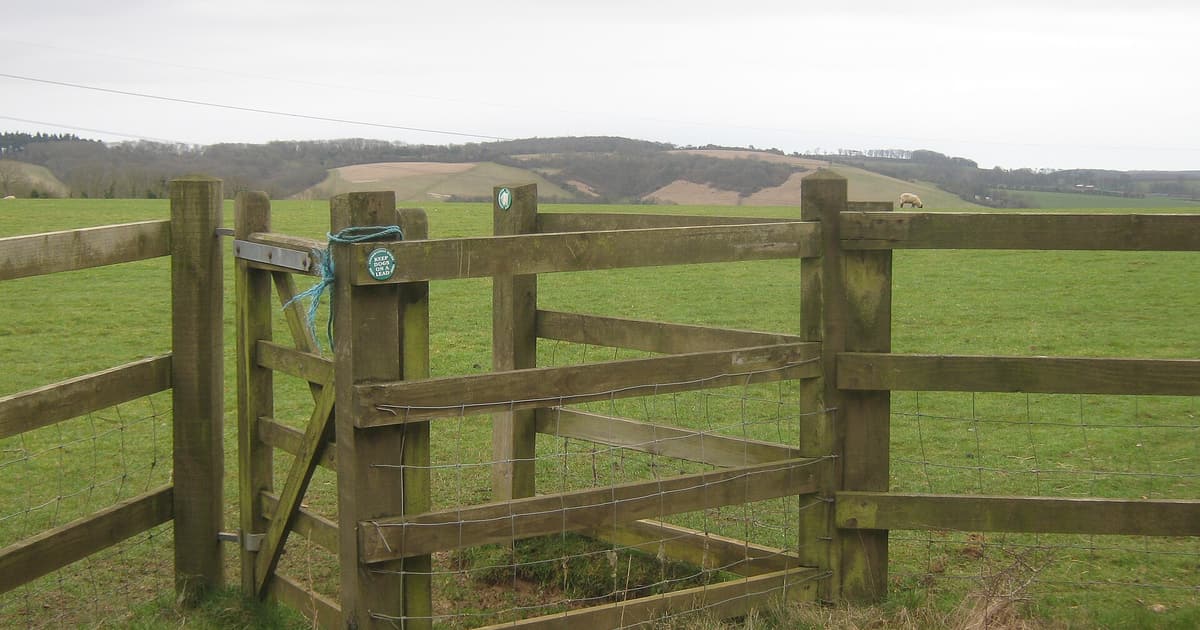

The Countryside Code is a short piece of GOV.UK guidance that describes how to enjoy parks, waterways, coast and countryside without being a nuisance to anyone, yourself, other walkers, or the people who live and work on the land. It was first set out in the 1950s and has been updated several times; the most recent revision was in 2023.
Reading the Code on the sofa feels like reading a list of the obvious. On a crowded path with a gate hanging open and a small dog chasing a lamb across a field, the obvious becomes less obvious. What follows is the Code in plain English, with a few small practical habits that make it stick.
Respect everyone
Paths are shared. Walkers, horse riders, cyclists, farmers moving stock, delivery drivers on lanes, the family out for an hour with a pram. The first part of the Code asks only that you notice this and behave accordingly.
- Say hello. A quiet ‘morning’ as you pass costs nothing and tells the other person you are a human being not a photograph.
- Give way on narrow paths. Walking downhill, let the uphill walker through; walking on a shared track, step aside for horses.
- Park sensibly. Do not block a farm gate, a passing place or a bus turning area, even for ten minutes. Rural life runs on a timetable you cannot see from the layby.
Protect the environment
This is the part most people associate with the Code and most people do well. Take your litter home, including a banana skin, which lasts months, and dog waste, which belongs in your bag however convenient the hedge looks. Leave gates as you find them. If a gate is open, there is a reason, and the reason is usually that stock has already been moved through.
Dogs are the single most asked-about part of the Code. The short version is: keep your dog in sight and under effective control, use a lead around livestock, on open access land during the bird nesting season and anywhere a sign asks for one, and clean up after it. That is the whole of the law and most of the courtesy.
Enjoy the outdoors
The Code is not a list of negatives. It encourages people to go out, and particularly to go further than the car park, because landscapes you spend time in are landscapes you learn to care about. It also encourages a small amount of preparation that is easy to shrug off. A charged phone, something warmer than you think you need, a map, enough water: these are not expedition kit, they are the minimum that lets you choose when to turn round.
GOV.UK summarises it in a line: it includes the rules you must follow when you’re enjoying parks and waterways, coast and countryside. The ‘must’ is doing some work. Most of the Code is good manners; parts of it are law.
Where the Code is the law
A few bits of the Code are not advisory. Allowing a dog to chase or worry livestock is a criminal offence under the Dogs (Protection of Livestock) Act 1953, and farmers in England are legally allowed to shoot a dog that is attacking sheep. Littering is a fineable offence under the Environmental Protection Act 1990. Lighting a fire on open access land is restricted under the Countryside and Rights of Way Act 2000, and most National Parks and large estates impose a total ban in dry conditions.
None of this is in the Code to scare anyone. It is there to remind us that some polite habits are, in fact, the only thing that keeps a wider access regime possible.
A few small habits that help
The Code works best as a short set of small habits you do not have to think about. Mine are:
- Lead on near livestock, even when the dog is well-trained.
- Latch the gate behind me even when it looks like it was already open, unless there is clearly a reason to leave it that way.
- Step off the path to let a horse rider through on a narrow track.
- Carry one spare bag for other people’s rubbish. This costs nothing and makes more difference than almost anything else.
When the path is on a farm
Rights of way cross working land. A footpath that runs through a cattle yard really does run through a cattle yard. Keep moving, keep calm, keep a sensible distance from stock. Cows with calves are more defensive than they look; if they move towards you, let the dog off the lead if necessary, a dog is faster than you, and leave the field by the quickest safe route.
If you do have an unpleasant interaction with a landowner, the rights of way guidance on GOV.UK is a useful record of what you were and were not allowed to do. We also have our own longer piece on rights of way.
The whole Code in one sentence
Leave the path at least as welcoming as you found it. If every walker does that, every walker after you can pass.
What the Code does not cover
The Countryside Code is about shared decency on the ground. It does not stand in for safety advice in bad weather, it does not replace the Highway Code on rural lanes, and it does not set out what to do in a genuine emergency. For the last, the long-standing advice is to dial 999 and ask for the police; if you are on a hill, the police will put you through to the mountain rescue team for the area. A grid reference from your map, or a shared location from your phone, saves a long and worrying search.
The Code also does not cover the rules for wild camping, which vary considerably across the UK. In most of England and Wales wild camping is not permitted without the landowner’s explicit consent, Dartmoor being the only large exception. In Scotland, camping is allowed under the broader right of responsible access, with a few local by-laws around popular areas. A walker planning an overnight stop needs to check the rules for the specific patch of ground rather than relying on a general sense of what is reasonable.