Home · Walks & essays · England-wide
Essay
How to report a blocked or broken footpath to the council
Autumn gales, overgrown hedges and the odd unhelpful gate leave plenty of paths harder to walk by November. A good report to the right people gets them fixed. Here is how to write one and what happens next.
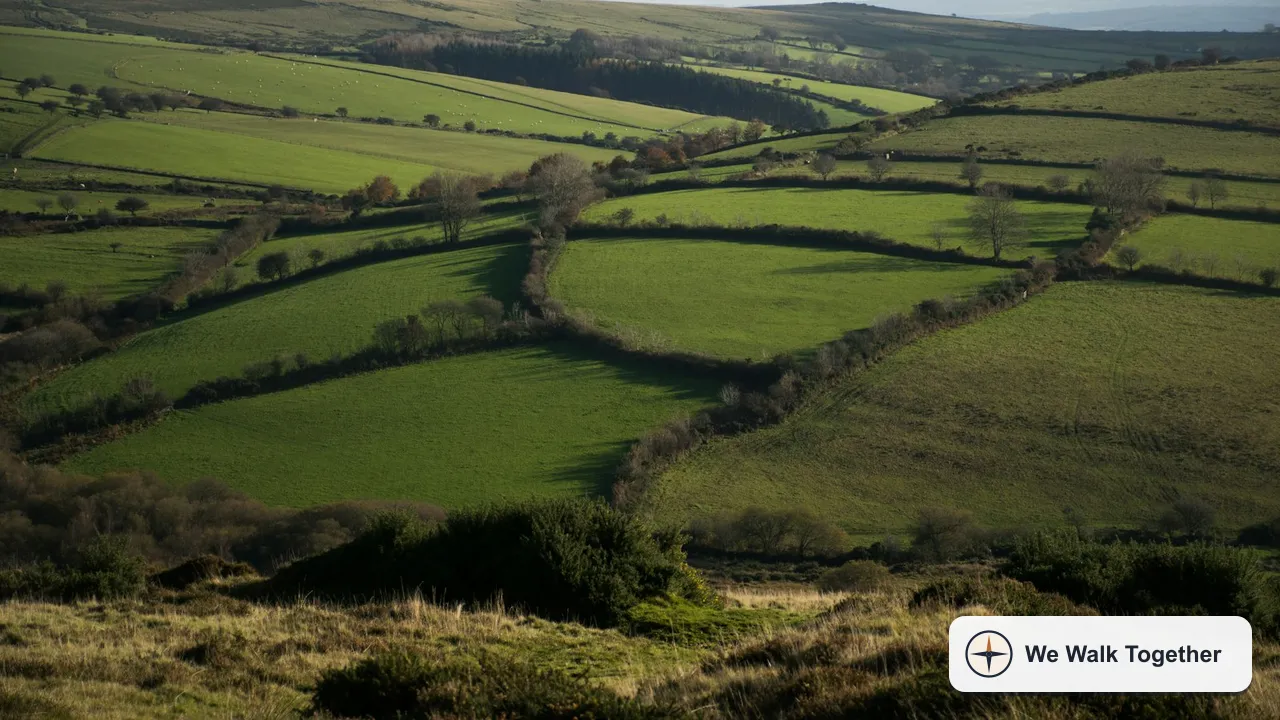
The short answer: report it to the rights of way team at the county or unitary council responsible for the area, using its online form or map if it has one. Give the exact location, describe the problem, and attach a photograph. Councils sort reports by urgency, so a dangerous structure or a path that is completely blocked with no way round will be dealt with much faster than a missing sign.
Who is responsible for what
Public rights of way in England are looked after by the highway authority, usually the county council or a unitary authority, sometimes working with national park authorities. The landowner has duties too. GOV.UK's guidance for landowners says that fences, walls, padlocked gates and barbed wire must not be put across a right of way, that vegetation must not be allowed to close it, and that obstruction is a criminal offence. The council can require removal and, if the landowner does not comply, remove it and recover the cost.
Landowners also maintain the stiles and gates they are responsible for, and can claim at least 25% of the cost of replacing them from the highway authority. That is why a broken stile is a fair thing to report even if you managed to climb over it: the council can follow it up with the landowner.
For the background on what a right of way is and how the different types of path work, our earlier essay on rights of way in plain English covers the basics.
What is worth reporting
West Sussex County Council's reporting page lists the kinds of things its team deals with, and they are typical of councils across England:
- bridges with missing or rotten deck planks
- broken stiles and gates
- fallen trees obstructing a path
- damaged or missing signs and waymarks
Some problems go elsewhere. West Sussex points out that problems with pavements and tarmac footways beside roads go through the roads reporting service, and that fly-tipping, litter and dog bins are often handled by district or borough councils.
How a council decides what comes first
Teams are small and networks are long, so councils triage. The West Sussex scheme is a clear example:
- Health and safety risk: immediate or severe danger, inspected and addressed within 2 working days, possibly with a temporary closure.
- High priority: an obstruction with no alternative route, investigated within 10 working days.
- Medium priority: an obstruction or surface problem with an alternative route, or broken or missing signs, checked during the routine 15-month inspection cycle.
- Low priority: minor obstructions with a way round, misleading signs or minor stile problems, dealt with if resources allow.
Other councils use different timescales, but the logic is similar. A clear report that shows whether there is a way round helps the officer put it in the right category.
What to include
The path number if you know it, a six- or eight-figure grid reference, a short description, which way you were walking, whether you could get past and how, and one or two photographs showing both the problem and its surroundings. Our OS map guide explains grid references if they are new to you.
Writing a report that gets acted on
Keep it factual and short. "Footpath 12, field gate at SU 123 456 padlocked shut, no stile or gap, no alternative route, photo attached" is far more useful than three paragraphs of frustration. Mark the spot on the council's interactive map if its form has one. If the same path has several problems, list them separately with their own locations.
Some councils, West Sussex among them, do not monitor reports at weekends or on bank holidays. If something is genuinely dangerous, such as a footbridge about to give way, say so clearly at the top of the report, and ring the council's number on the next working day if you hear nothing.
If nothing happens
Patience is part of it. A medium-priority report may wait for the next scheduled inspection. But if a serious obstruction goes unanswered for months, there are formal routes.
The first step is the council's own complaints process. The Local Government and Social Care Ombudsman's fact sheet explains that councils should have no more than two complaint stages, and that a complaint should take no longer than 16 weeks. After that, the Ombudsman can look at things like delays and poor advice, and you should normally go to the Ombudsman within 12 months of realising something has gone wrong.
The Ombudsman is unlikely to look at a council's failure to remove an obstruction, because there is a separate legal route: an application to the magistrates' court under section 130 of the Highways Act 1980. That is a serious step and best taken with advice, often from a local footpath society or the Ramblers.
Doing your bit on the day
If you meet an obstruction, the sensible thing is to get round it with as little damage as possible, then report it. You have the right to pass along the line of the path, and a short detour around a fallen tree is reasonable. Climbing fences or breaking gates is not. The Countryside Code asks walkers to leave gates as they find them, and that applies even when the gate is in the wrong place.
Most of the paths we walk are open because somebody reported a problem and somebody else fixed it. A ten-minute report after a winter walk is one of the most practical things a walker can do for the network.