Home · Walks & essays · England-wide
Essay
Ploughed over: the rules on cross-field footpaths after autumn cultivation
Autumn is when many arable fields are cultivated and sown, and cross-field paths can vanish under the plough. The law gives farmers a set time to put them back, and walkers a clear right to use the line.
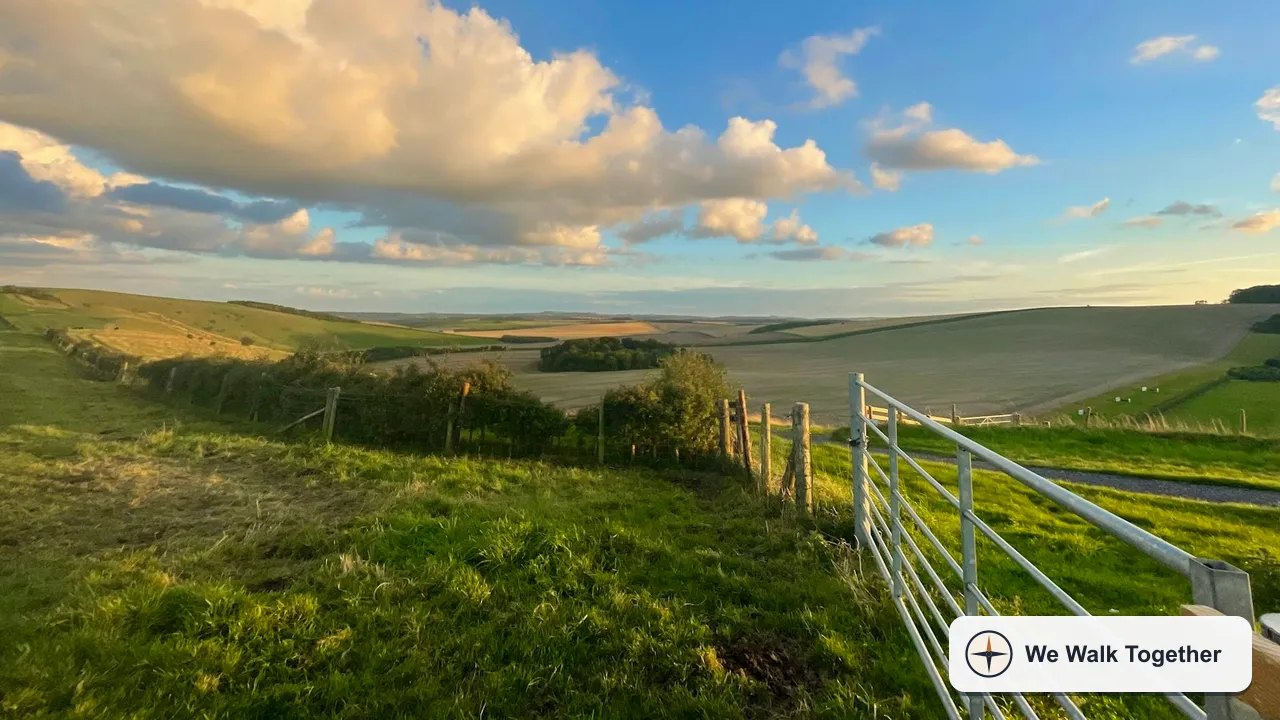
If a footpath across a field has been ploughed, the farmer is allowed to do that, but must restore it. The rule in England is that a cross-field path has to be made good to a minimum width within 14 days of the first cultivation for that crop, and within 24 hours after any later cultivation, unless the highway authority has agreed a longer period in writing. In the meantime, you still have the right to walk the line of the path.
Those figures come from GOV.UK's guidance on landowner responsibilities for public rights of way, and they are worth knowing in October and November when much of the winter crop goes in.
Field-edge paths and cross-field paths are treated differently
The guidance draws a firm line between paths that run around the edge of a field and paths that cut across the middle.
- Field-edge paths should not be cultivated at all. The landowner must keep a strip undisturbed at least 1.5 metres wide for a footpath and 3 metres for a bridleway.
- Cross-field paths may be ploughed if it cannot reasonably be avoided, but the path must then be made apparent on the ground and kept to at least 1 metre wide for a footpath and 2 metres for a bridleway, free from crops.
The phrase that matters for walkers is "apparent on the ground". In practice a reinstated path is usually a flattened or clearly marked strip that you can follow from one side of the field to the other.
What you are allowed to do on a ploughed path
A right of way does not disappear because the surface has been turned over. If you find a path ploughed and not yet restored, you can walk along its legal line, even through soft soil or a young crop. You should keep as close to the line as you can and not wander across the rest of the field. Walking around the headland instead is often easier and causes no harm, but strictly speaking that is a courtesy, not a right.
This is where a map earns its keep. Our earlier essay on public footpaths and rights of way explains why the recorded line is what counts, and the guide to reading an Ordnance Survey map shows how to pick out the green or red dashes on Explorer sheets. Take a bearing from the stile you came in by to the one you expect on the far side, and walk it.
Be fair about the timing
A path ploughed yesterday is not yet a breach. The 14-day window exists because farmers need time to drill and roll the field. If the field has clearly been sown for a few weeks and there is still no line, that is worth reporting.
Crops, fences and other obstructions
The same guidance sets out what landowners must not do to a right of way. Fences, walls, new hedges, padlocked gates and barbed wire across the line are all ruled out. Vegetation should not be allowed to encroach from the sides or from above. Obstructing a right of way is a criminal offence, and the highway authority can require it to be removed. If the landowner does not act, the council can remove it and recover the cost.
A crop growing over a cross-field path in spring is the classic example. Oilseed rape at full height is a miserable thing to wade through in waterproof trousers, and the law expects the path to have been kept clear of it.
Livestock, signs and stiles on farmland
While you are reading the guidance, a few other rules are useful on farm walks:
- Bulls over 10 months old of recognised dairy breeds are not allowed in fields crossed by a public right of way.
- Bulls over 10 months of other breeds may be in such a field only if accompanied by cows or heifers.
- Bull warning signs should only be displayed while a bull is actually in the field. A permanent "beware of the bull" notice on an empty field is misleading, and erecting misleading signs is an offence.
- Landowners maintain the stiles and gates they are responsible for and can claim at least a quarter of the cost of replacement from the highway authority. The guidance encourages replacing stiles with gates or, better, gaps.
Reporting a path that has not been put back
Arguing at the field edge rarely helps and usually spoils two people's afternoons. A short report to the council's rights of way team does more good. Note the path number if your map or the council's online map shows it, give a grid reference, and take a photograph that shows the field and the missing line.
Councils prioritise reports in different ways. West Sussex County Council's reporting page is a good illustration: an obstruction with no alternative route is treated as high priority and investigated within 10 working days, while one with an easy alternative is checked during routine inspections. A path that has been ploughed out completely, with no headland to follow, tends to sit near the top of that list.
Seeing it from the tractor seat
Most farmers reinstate paths without fuss, and many go further, leaving wide grass margins that are a pleasure to walk. Arable work runs to weather windows, and a wet autumn can push drilling and rolling later than anyone wants. A path that is rough for a couple of weeks in November is usually fine by the new year.
The Countryside Code asks walkers to respect the working countryside, and that cuts both ways. Walk the line, keep dogs close, leave the crop alone either side, and save the report for the paths that really have been forgotten. That is how good relations on cross-field routes are kept for the next generation of walkers.